

Canal Wall Services
Canal Wall Doctor provides specialist inspection, maintenance and repair services for revetment walls across Bribie Island, the Gold Coast and surrounding Southeast Queensland waterways.
We inspect walls at low tide from an AMSA-approved commercial punt, allowing us to assess the full wall face, including areas below the waterline.
From routine weephole maintenance through to structural repairs and subsidence correction, we can identify the issue, explain what it means and provide a clear quote for the work required.
The 16-Point Wall Inspection
Every wall inspection begins with our comprehensive 16-point assessment.
We inspect the wall at low tide from our commercial punt, assessing the full face of the wall rather than only what can be seen from the property. We look for signs of deterioration, material loss, movement, subsidence and other conditions that can affect the wall's performance.
You receive a written condition report covering each inspection category, with clear recommendations where work is required. If repairs or maintenance are recommended, we can provide a fixed-price quote before any work is booked.
You do not need to be home for the inspection, and there is no obligation to proceed with any recommended work.
Specialist & Structural Repairs
-
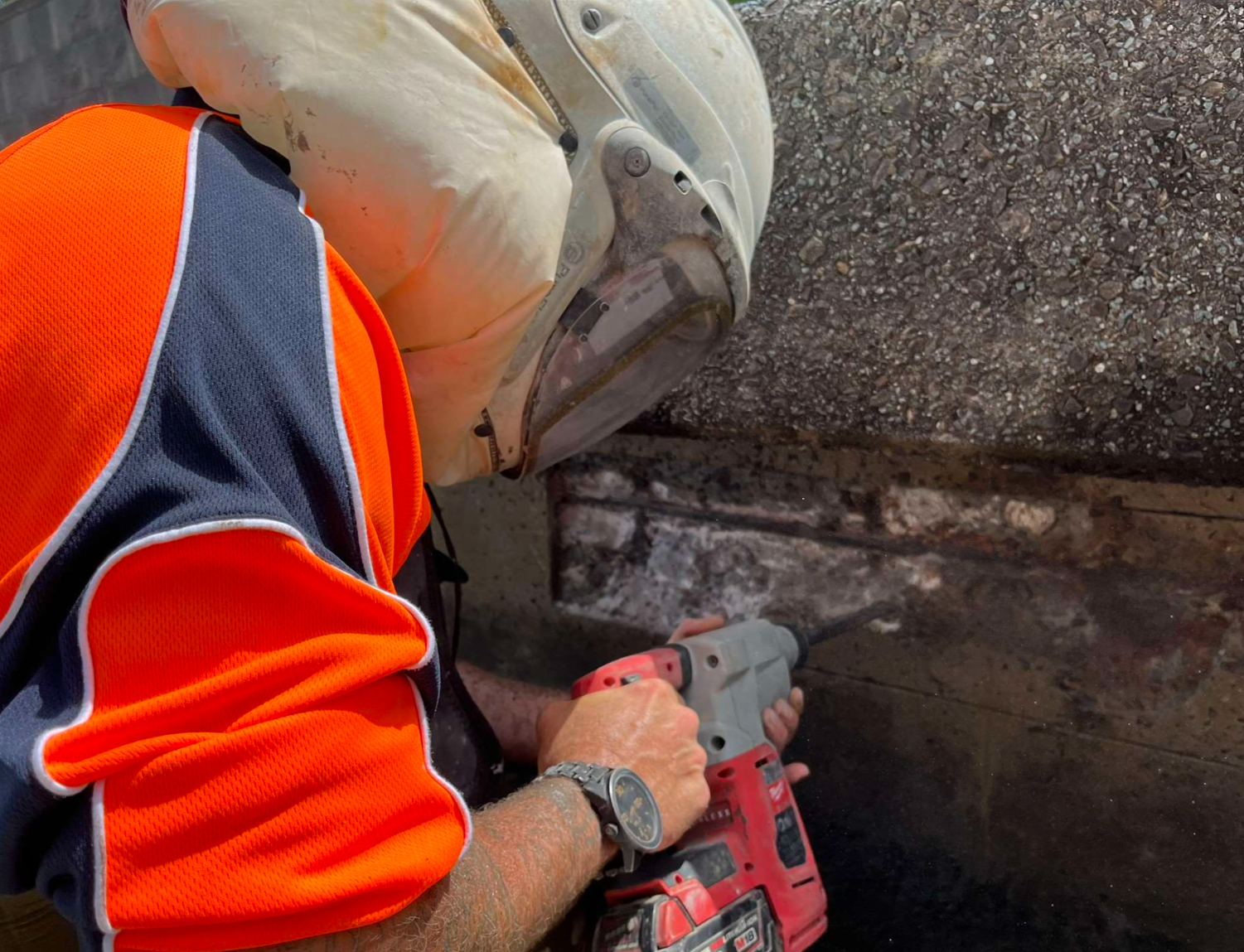
Construction joints can develop cracks as the wall ages or as the surrounding concrete moves. Cracking can enlarge the opening between panels and create another pathway for water and material loss.
Where appropriate, we repair the affected area with marine-grade repair materials to restore the integrity of the joint.
-
Our inspections also identify smaller construction or surface issues that can contribute to deterioration over time.
These can include exposed tie wire, remnants of formwork, rusting metalwork and other items that allow moisture to reach deeper into the concrete. Where practical, we remove or treat these issues before they develop into larger problems.
-
The footing is the base of the wall, often below the visible rock level and below the waterline. Deterioration or leakage at this level can allow water and material to pass beneath the wall.
Where required, we clean and repair affected areas using marine-grade repair materials to help prevent further leakage and material loss.
-
Wall panels should remain aligned. Movement or rotation can indicate that material has been lost from behind or beneath the wall.
We measure and monitor panel alignment during our inspections. Where significant or ongoing movement is identified, we can arrange an engineering assessment and coordinate larger remedial works where required.
-
This issue is specific to Bongaree, where the wall design includes a substantial concrete slab over the top of the wall.
Movement over time can create a gap between the slab and wall, allowing material to escape. Where required, we fill and seal the gap to help prevent further material loss.
-
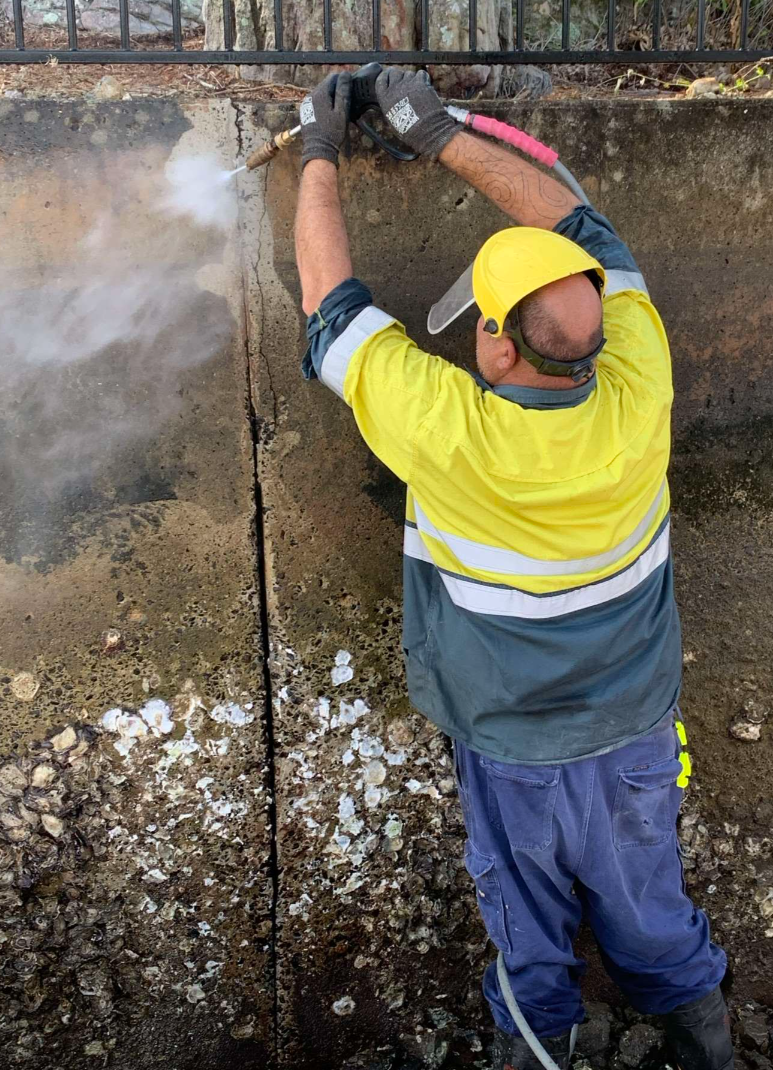
We offer optional pressure-cleaning services for both canal walls and pontoons.
For walls, we can pressure clean the exposed face above the oyster line to remove dirt and marine growth. We generally recommend leaving oysters in place where possible, as they provide some protection to the concrete, but additional removal can be carried out on request.
For pontoons, we can clean the sides, walkway and carpet, adjusting the pressure where surfaces have deteriorated. Cleaning beneath the pontoon is not included, as this requires a diver.
These services are available on request and can be quoted alongside other maintenance or repair work.
-
We can pressure clean pontoon pylons and remove accumulated barnacles and marine growth.
This is an optional service and is generally requested where marine growth has become excessive or is interfering with pontoon components.
Maintenance & Common Repairs
-
What it is:
We access your wall by boat at low tide and service each weephole to restore proper drainage and filtration. We remove the existing plug and filter, clear marine growth and, where necessary, decalcify the rear of the opening to restore flow. The weephole is then cleaned, fitted with a new geofabric filter and refitted with its plug.Why it matters:
Weepholes allow water pressure behind the wall to escape back into the canal. Keeping them clear and properly filtered helps prevent hydrostatic pressure and material loss behind the wall, both of which can contribute to serious wall deterioration.Ongoing maintenance:
We recommend servicing weepholes annually. Our Annual Wall Care Program makes this easy by reminding you when your service is due and keeping the wall maintained year after year. -
What it is:
Weephole plugs are porous concrete plugs that allow water to pass through while helping keep marine life out. They also hold the geofabric filter securely against the back of the weephole.Why it matters:
Missing or deteriorated plugs leave the filter unsupported and allow marine life to enter the weephole. This can restrict drainage, make future servicing more difficult and allow material from behind the wall to escape.We inspect the condition of every plug during the annual service and identify any that are missing, damaged or deteriorated.
-
What it is:
Revetment walls are built from individual concrete panels, with a joint between each panel. These joints need to remain flexible because a small amount of panel movement is normal, so we use a flexible marine-grade sealant rather than rigid concrete.The lower section of the joint is also sealed with marine-grade cement to help prevent material loss from beneath the wall.
Why it matters:
Open or deteriorated joints allow water and material to pass through the wall with each tide. Over time, this can lead to material loss, voids and subsidence behind the wall.Construction joint reseals typically have a service life of around five years and carry a three-year warranty, subject to the required annual weephole maintenance.
-
What it is:
Spalling occurs when reinforcing steel inside the concrete begins to corrode. As the steel rusts and expands, it cracks and eventually breaks away the surrounding concrete.We remove the affected concrete, clean and treat the exposed reinforcement with a zinc-rich primer, and reinstate the area with new concrete.
Why it matters:
Spalling is progressive. If the exposed reinforcement is left untreated, corrosion can continue beneath the concrete and the affected area can become significantly larger.Early repairs help prevent a localised problem from developing into a much more extensive structural repair.
-
Construction and other abandoned bolt holes are openings left in the wall from its original construction or from removed fixtures such as ladders.
We clean and seal these openings with suitable marine-grade materials to prevent water penetration and reduce the risk of further concrete deterioration.
-
The outer layer of concrete naturally deteriorates over time from exposure to saltwater, weather and the marine environment. We may find surface deterioration, honeycombing or early hairline cracking during an inspection.
Where appropriate, we can pressure clean the wall and apply a penetrating sealant that enters the concrete and provides additional protection against the elements. It is a preventative treatment designed to slow further deterioration, rather than repair existing structural damage.
-
Subsidence occurs when material is lost from behind the wall, creating a void beneath the ground, pathway or slab.
The first step is to identify and address the source of the material loss, which may involve repairing weepholes, construction joints or other openings. Where a void has formed, we can pump sand slurry from the canal back behind the wall to replace the lost material.
Where a concrete slab prevents us from seeing what is underneath, we can install inspection ports through the slab to identify and access concealed voids. This provides a practical way to investigate subsidence before more extensive damage develops.
Buying a Waterfront Property?
Before you commit to a waterfront property, have the canal wall independently inspected.
Our Buyer's Wall Inspection Report assesses the condition of the wall at low tide and provides a clear written assessment of any maintenance or repair requirements.
Keep Your Wall Maintained
Canal walls are exposed to constant tidal and marine conditions, so maintenance does not stop once repairs are completed.
Our Annual Wall Care Program keeps your weepholes serviced, monitors the condition of your wall and helps identify developing problems before they become larger repairs.
Need Your Wall Inspected?
Whether you need routine maintenance, have identified a problem or simply want to know the condition of your wall, we can inspect it and provide a clear recommendation. Book a Wall Inspection - Call 0427 949 163, email admin@canalwalldoctor.com.au, or complete our enquiry form and we'll be in touch to arrange a suitable time.